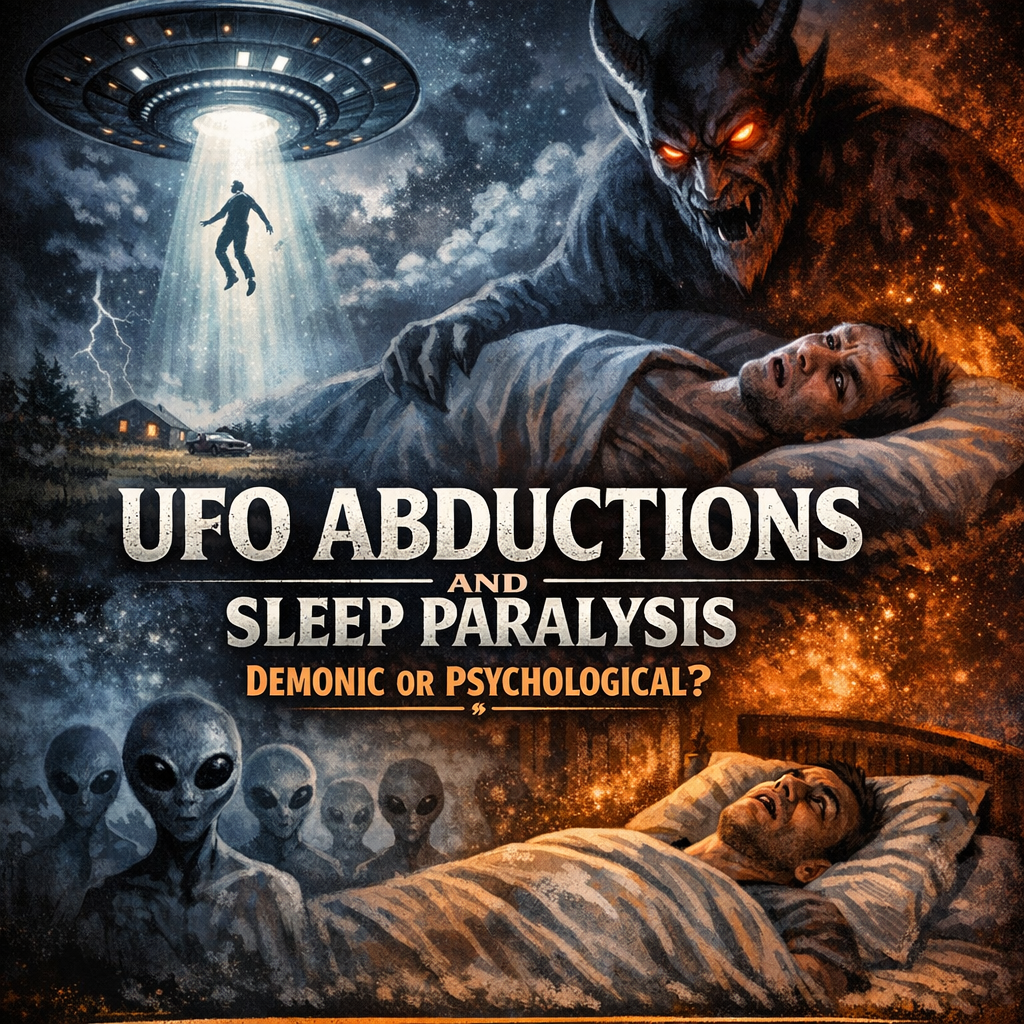
UFO abduction stories sit at a strange crossroads: modern technology, ancient fears, spiritual questions, and very real human experiences. Some people describe being frozen in bed, sensing a presence in the room, seeing lights or figures, and feeling as if they were taken or examined. Others connect these events to “aliens,” government secrecy, or end-times speculation. As Christians, we should neither mock people who are frightened nor rush into sensational claims. A Bible-first approach asks careful questions: What happened? What does Scripture actually say? And how do we test spiritual experiences in light of Jesus Christ?
When Sleep Paralysis Feels Like an Abduction
Sleep paralysis is a well-documented experience in which a person becomes conscious while the body remains temporarily unable to move. It often happens while falling asleep or waking up. Many people report pressure on the chest, difficulty speaking, a sense of dread, shadows in the room, or the feeling that someone—or something—is present. In a modern UFO context, these sensations can be interpreted as an alien abduction. In another culture or time period, the same experience might be described as a demon, a witch, a ghost, or a night spirit.
This does not mean every report is “fake,” nor does it mean the person is lying. The experience can be terrifyingly real to the person who endures it. Christians should be careful here. We believe humans are embodied souls, meaning our physical condition can affect our perception, emotions, and spiritual life. Lack of sleep, stress, trauma, medication, and anxiety can all shape nighttime experiences. A psychological or neurological explanation does not automatically deny the reality of the unseen realm; it simply reminds us that we are creatures, not pure spirits.
At the same time, Scripture does teach that there are rebellious spiritual beings who deceive, oppress, and seek worship that belongs to God alone. The Bible’s unseen realm includes angels, demons, principalities, powers, and divine council language that many modern Christians overlook. So while sleep paralysis may often have a natural explanation, the Christian should not become a materialist who assumes the spiritual world is imaginary. The wise path is neither panic nor denial, but discernment. We test experiences by Scripture, not by fear, fascination, or internet theories.
Testing UFO Abduction Claims by Scripture
The first biblical test is whether the experience or message exalts Christ or distorts Him. In 1 John 4:1–3, believers are told not to believe every spirit, but to test the spirits. Any “alien” message that denies the incarnation, diminishes the cross, redefines sin, or presents humanity as needing enlightenment instead of redemption is not from God. Scripture is clear: Jesus Christ is the eternal Son of God, crucified and risen, the only mediator between God and man. If a being of light, a channeled message, or an abduction narrative leads people away from Christ, Christians should recognize deception at work.
The second test is whether the claim fits what Scripture actually reveals. Genesis 6, the Nephilim, the Watchers tradition, and the language of fallen heavenly beings are important topics, but they must be handled carefully. The Bible does speak of spiritual rebellion crossing boundaries God established. It also speaks of deception in the last days, lying signs and wonders, and doctrines of demons. But Scripture does not tell us to identify every UFO or UAP as a fallen angel, nor does it say government disclosure is automatically Bible prophecy. We should avoid forcing modern headlines into the Bible while still allowing Scripture to shape how we think about the supernatural.
The third test is fruit. Does the experience produce fear, bondage, obsession, occult curiosity, or a new “revelation” that competes with Scripture? Or does it drive a person to prayer, repentance, truth, and trust in Christ? Christians should respond pastorally: pray, seek counsel from mature believers, consider medical and sleep-related factors, reject occult practices, and cling to the Word of God. If there is spiritual oppression, Christ is not threatened by it. The Lord Jesus has authority over demons, powers, and every name that can be named. Whether an abduction account is psychological, demonic, misunderstood, or a mixture of factors, the Christian’s anchor remains the same: Scripture is true, Christ is Lord, and fear does not get the final word.
UFO abduction stories and sleep paralysis raise serious questions, but Christians do not need to be gullible or cynical. We can take human suffering seriously, acknowledge the reality of spiritual warfare, and still refuse to build doctrine on speculation. The Bible gives us a better framework than fear: test the spirits, examine the fruit, stay grounded in the gospel, and submit every mystery to the authority of Jesus Christ. In a world fascinated by aliens, UAP disclosure, fallen angels, and the unseen realm, the most important truth remains unchanged: Christ has triumphed over the powers, and His people belong to Him.
Related Reading
- Who Were the Watchers? Angels or Aliens?
- UFOs and the Bible: Are “Aliens” Part of a Last Days Deception?
- The Complete Story of the Nephilim from Genesis to Revelation
- The Nephilim Giants: What They Were and Why It Matters
Get the Book
Go deeper with Jared Lewis’s books on Google Play or browse the collection on Etsy.