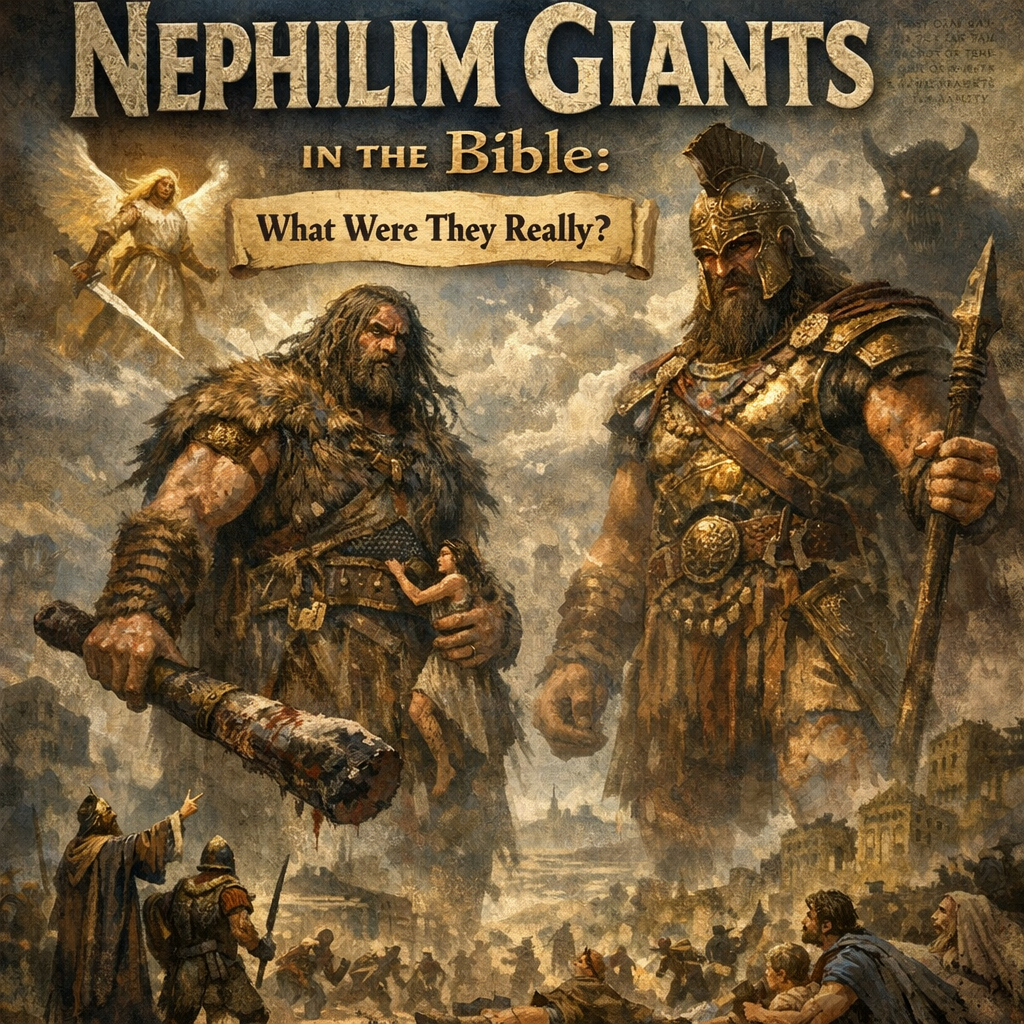

Few topics in biblical scholarship generate as much controversy — or as much silent curiosity — as the Nephilim. Mentioned in Genesis 6:4 and Numbers 13:33, these beings were giants of ancient times, described as “mighty men” and “men of renown.” But where did they come from? What does the Bible actually say about their nature and origin? And why does their story matter for understanding Scripture and the world we live in today?
What Does “Nephilim” Mean?
The Hebrew word Nephilim (נְפִילִים) is notoriously difficult to translate. The most common renderings are “fallen ones,” “those who cause others to fall,” or simply “giants.” The Septuagint (Greek Old Testament) translates it as gigantes — giants. What is clear from context is that the Nephilim were associated with great physical stature and violent power. Numbers 13:33 records the report of the Israelite spies who entered Canaan: “We saw the Nephilim there… We seemed like grasshoppers in our own eyes, and we looked the same to them.”
The Genesis 6 Account
The primary biblical text on the Nephilim is Genesis 6:1–4: “When human beings began to increase in number on the earth and daughters were born to them, the sons of God saw that the daughters of humans were beautiful, and they married any of them they chose… The Nephilim were on the earth in those days—and also afterward—when the sons of God went to the daughters of humans and had children by them. They were the heroes of old, men of renown.”
The phrase “sons of God” (Hebrew: bene Elohim) in this context is the same phrase used in Job 1:6 and Job 38:7 to refer to angelic beings who stand before God. The overwhelming consensus of early Jewish interpretation — including the Dead Sea Scrolls, the Book of Enoch, the Book of Jubilees, and the writings of Josephus — is that these were fallen angels. Their offspring with human women were the Nephilim.
Post-Flood Nephilim: How Did They Return?
One of the most frequently asked questions about the Nephilim is: if the flood wiped out all flesh, how do giants appear again in Canaan during the time of the Israelite conquest? The text of Genesis 6:4 actually hints at the answer: “The Nephilim were on the earth in those days—and also afterward.” The phrase “also afterward” strongly implies a second occurrence. The Book of Enoch and the Book of Jubilees suggest that not all of the Nephilim-producing angels were imprisoned immediately, and that there may have been a second, smaller incursion that produced the giant clans the Israelites later encountered in Canaan.
The Giant Clans of Canaan
The Bible records multiple giant clans inhabiting Canaan before and during the Israelite conquest:
- Anakim: Descendants of Anak, they occupied the hill country of Canaan. The spies reported that Goliath’s ancestors were among them.
- Rephaim: Encountered east of the Jordan; Og of Bashan was their last survivor. Deuteronomy 3:11 records that his bed was 13.5 feet long.
- Zamzummim: A giant people driven out by the Ammonites before Israel’s arrival.
- Emim: Described as great, many, and tall as the Anakim (Deuteronomy 2:10–11).
- Goliath of Gath: The most famous, described in 1 Samuel 17:4 as standing over 9 feet tall.
Why Did God Command Israel to Destroy Them?
The divine command to completely destroy the Canaanite nations has troubled readers for centuries. When viewed through the lens of the Nephilim narrative, it takes on a different character. These were not simply enemy nations — they were populations that had been genetically and spiritually corrupted through repeated hybridization with fallen angelic beings. The command was not ethnic cleansing but a continuation of the cosmic judgment begun with the flood: the elimination of a corrupted bloodline that stood as an obstacle to the Messianic line God was preserving through Israel.
Watch the Full Video Study
Watch the complete biblical breakdown of the Nephilim, their origins, their legacy in Canaan, and their connection to end-times prophecy:
The Nephilim and the Last Days
As Jesus warned that the end times would mirror the days of Noah, understanding the Nephilim becomes prophetically urgent. The rise of transhumanism, gene editing, and persistent reports of non-human intelligence interacting with humanity draws striking parallels to the ancient Watcher/Nephilim account. Whether these modern developments represent a literal resurgence of the same corrupting influence, or merely echo the same spiritual dynamics, Christians need a solid biblical framework to navigate what is coming.
Read the Full Study
Dive deeper into the Nephilim, the Watchers, the Book of Enoch, and their prophetic implications with Jared Lewis’s comprehensive biblical study:
Follow Jared Lewis
- 🎥 YouTube: @JaredLewisBooks
- 📸 Instagram: @JaredLewisBooks
- 🧵 Threads: @JaredLewisBooks
- 🐦 X (Twitter): @JaredLewisBooks
Related Reading: Nephilim Giants and the Cosmic Conflict
The Nephilim giants are the focus of this post, but they fit into a much larger cosmic war narrative. For the complete arc of that story from Genesis to Revelation, read our cornerstone post: the complete story of the Nephilim and the coming kingdom.
The Nephilim’s origin in the Genesis 6 account is explained in detail in our post on who the sons of God in Genesis 6 actually were.
After the flood, descendants of the Nephilim—the Anakim and Rephaim—became the giant nations Israel had to face in Canaan. For the full catalog of these nations, see giants in the Bible: the Nephilim, Anakim, and Rephaim explained.
Mount Hermon was the location connected to the Watchers’ descent and the beginning of the giant bloodline. For that story, read Mount Hermon and the divine rebellion.
What the Nephilim Reveal About Human Nature and God’s Purposes
One of the often-overlooked dimensions of the Nephilim narrative is what it reveals about human nature itself. Genesis 6:1–2 describes the sons of God taking the daughters of men as wives. Whatever the precise identity of these sons of God, the text emphasizes that human beings participated in this corruption—willingly. The daughters of humanity were not merely passive victims. The world of Genesis 6 was one in which humanity had become so thoroughly corrupted that God observed every inclination of the thoughts of the human heart was only evil all the time (Genesis 6:5). The Nephilim are not the cause of that corruption—they are a symptom and an accelerant of it. This sobering picture should prevent Christians from locating the problem of evil exclusively in spiritual powers. The human heart is capable of profound corruption on its own. What the Nephilim narrative teaches is that when spiritual rebellion and human sin combine, the results are catastrophic. It also teaches that God is not surprised by such catastrophe. He saw it, judged it, and preserved a remnant through which His redemptive purposes would continue. That same God watches over His creation today, and nothing that happens in the spiritual or physical realm catches Him off guard.